Ten-odd Days
traipsing to see the world, our way
Delphi, the Centre of the World

As considered by ancient Greeks, that is.
According to ancient Greek mythology, Zeus released two eagles in opposite directions of east and west, and the place where they met again – Delphi – was denoted to be the centre of the known world, the place where heaven and earth met. Inscribed as a World Heritage Site in 1987, Delphi was considered to be a sacred religious sanctuary dedicated to the Greek god Apollo, who spoke through his oracle there.
Most of the well-preserved archaeological ruins that we see today at Delphi dates back all the way to 6th century B.C. although Delphi was first developed in 8th century B.C. by priests from Crete, believed to be responsible for bringing the cult of Apollo to mainland. Delphi went on to become highly influential, whereby the oracle was frequently consulted on both private matters and affairs of the state, and that included prior to launching wars or founding new colonies. The oracle was in such high demand so much so that affluent individuals even resorted to paying large amounts in order to get ahead in line.
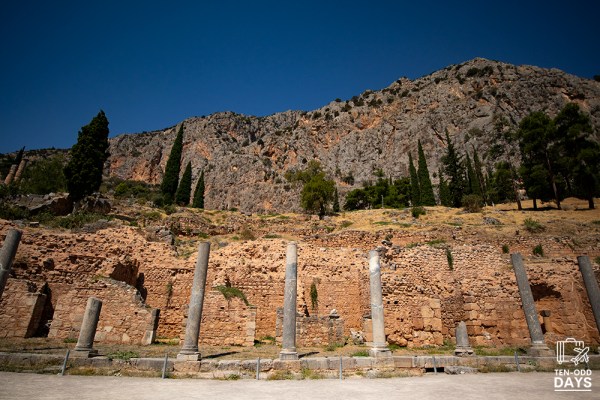
During the planning phase, I agonised over whether we should make Delphi (as opposed to another destination) as our first stop after landing. Given its importance in Greek history and the extent of the site, we estimated that it would take us several hours to cover whole place and it probably wasn’t the best idea to tire ourselves out on the first day of our vacation. Nonetheless we decided to push ahead.
And was immediately proven that it was a bad idea to drive out from Athens Airport to Delphi straight after a long 11.5-hr flight. In the process of trying to get used to driving on the right side of traffic and navigating Athens’ crazy morning traffic, I crashed the side mirror against a street lamp. This is the first time I’ve ever had an accident with a rental car. Thankfully only the cover of the mirror got knocked off, and could be attached back.
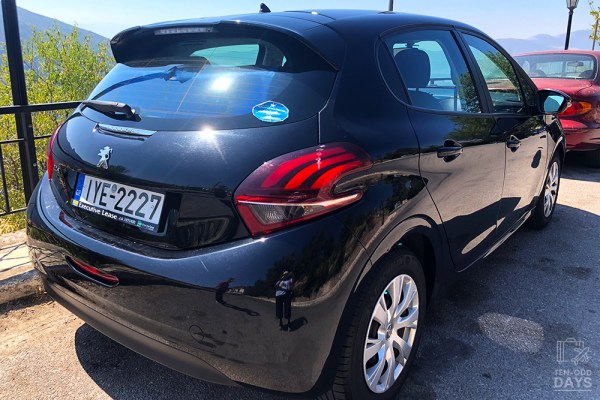
Delphi isn’t located that far away from Athens, and is the second most popular archaeological site in Greece, behind the Acropolis in Athens. Our drive took us a relatively short 2.5 hrs, but that was the least of our problem. We couldn’t find parking space anywhere near the entrance of the ruins and ended up parking in the town nearby, a long walk away.
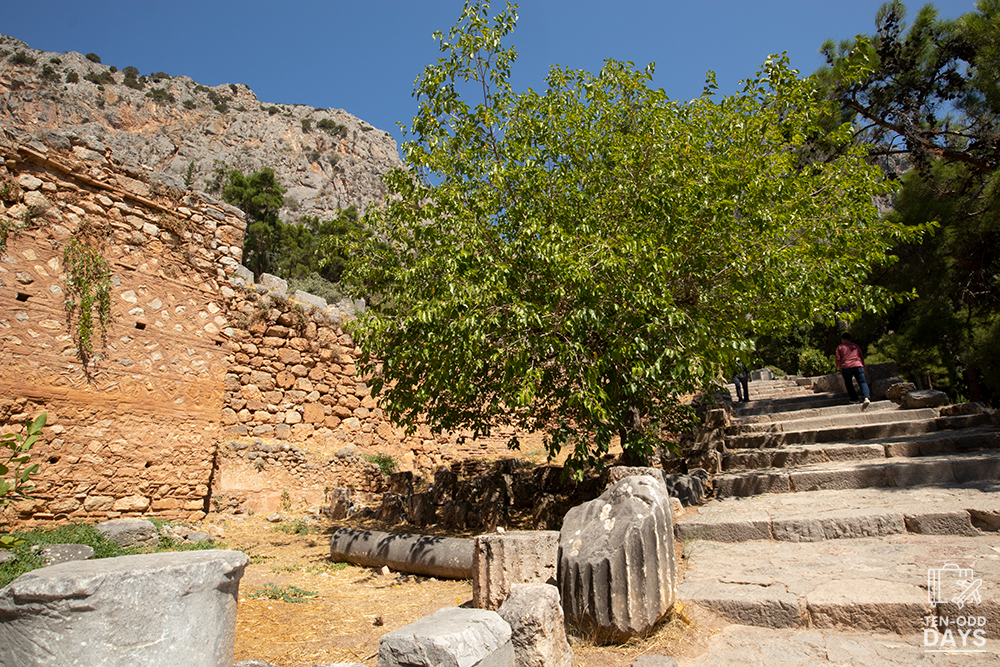
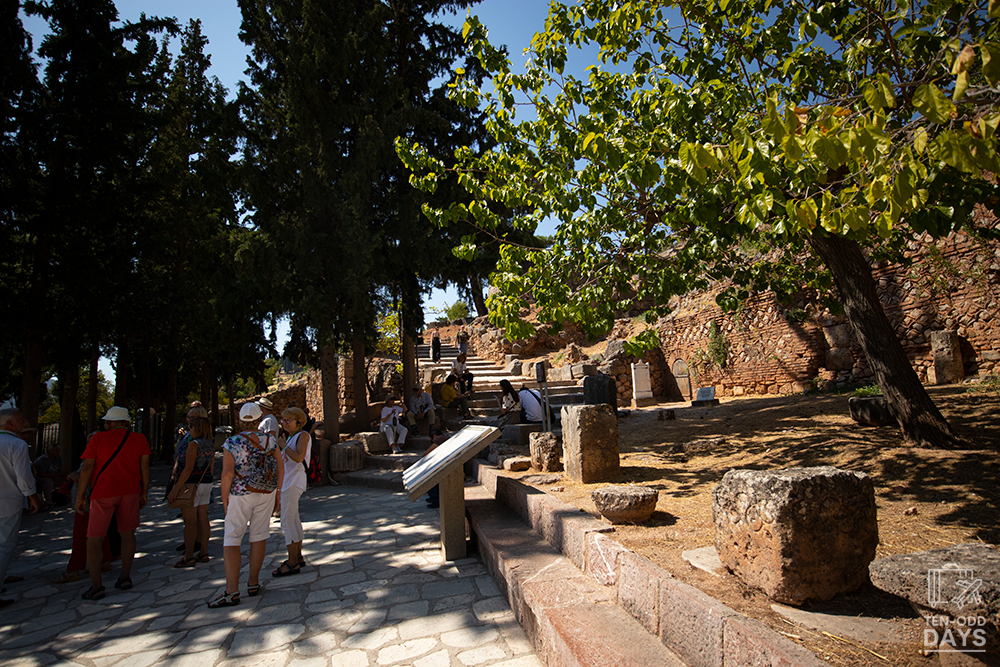

We experienced the brutal heat of Greece’s summer first-hand the moment we got off the car. To be honest, we are not unfamiliar with summer conditions coming from a tropical country, but we seldom have a completely cloudless blue sky here in Singapore, a phenomenon we encountered almost daily in Greece. Heat aside, our pictures turned out really gorgeous because of the blue. Can’t have the cake and eat it too, I reckon.
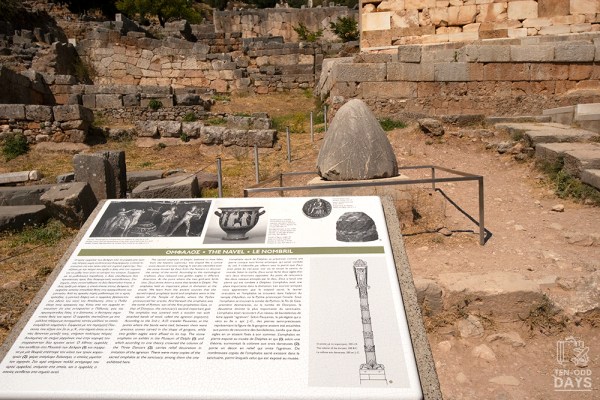
One of the first monuments we saw was The Navel, an oval marble stone, denoting the point at which the two eagles which Zeus released crossed paths again. This point is also known as the centre of the world, or ‘navel of the Earth’. However what is set at the archaeological site is only a simplified duplicate; the original has been placed in the Museum of Delphi.
Next, we came to arguably the most important monument at the archaeological site – Temple of Apollo. To be exact, we first saw the group of towering Doric columns and took possibly close to a hundred pictures of the colonnades against the sun. Alright, that’s an exaggeration but suffice it to say that we did spend a lot of time admiring the limestone + porous stone constructed columns.
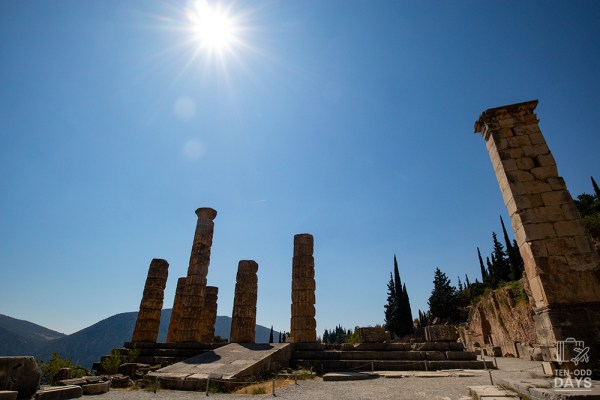
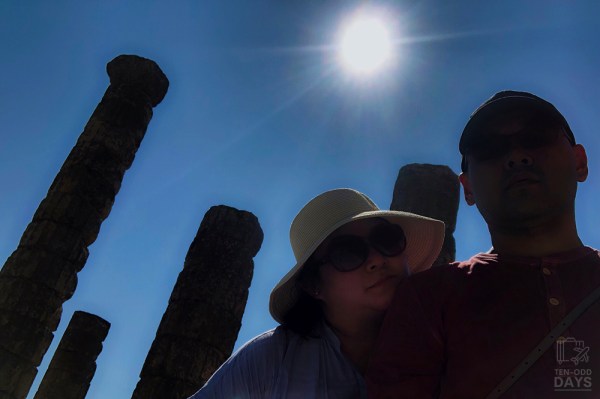
After passing the Temple of Apollo we began tackling the more tiring aspect of exploring the Delphi site – slopes. As age catch on, we truly understood first-hand how lack of sleep affects stamina. 😆
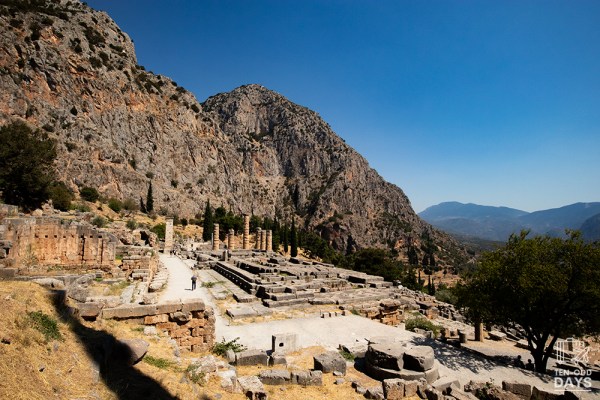
But the views were well worth it. From afar, it was easier to visualise how the Temple of Apollo used to look like before its decay. According to records, Pythia (the high priestess) the oracle sat within the temple, likely behind a curtain while the helper priests relayed questions from petitioners. What then followed is what I would call ‘a fuzzy mess’, subject to various questionable and sometimes, conflicting interpretations by the priests as Pythia entered a state of delirium and uttered incomprehensible words. Unreliable as it sounds, the Temple of Apollo enjoyed extremely high prestige between the 6th and 8th centuries B.C., often swaying both military and political decisions. Eventually the spread of Christianity in the region led to its decay, and it was permanently silenced in AD390 when the temple was destroyed.
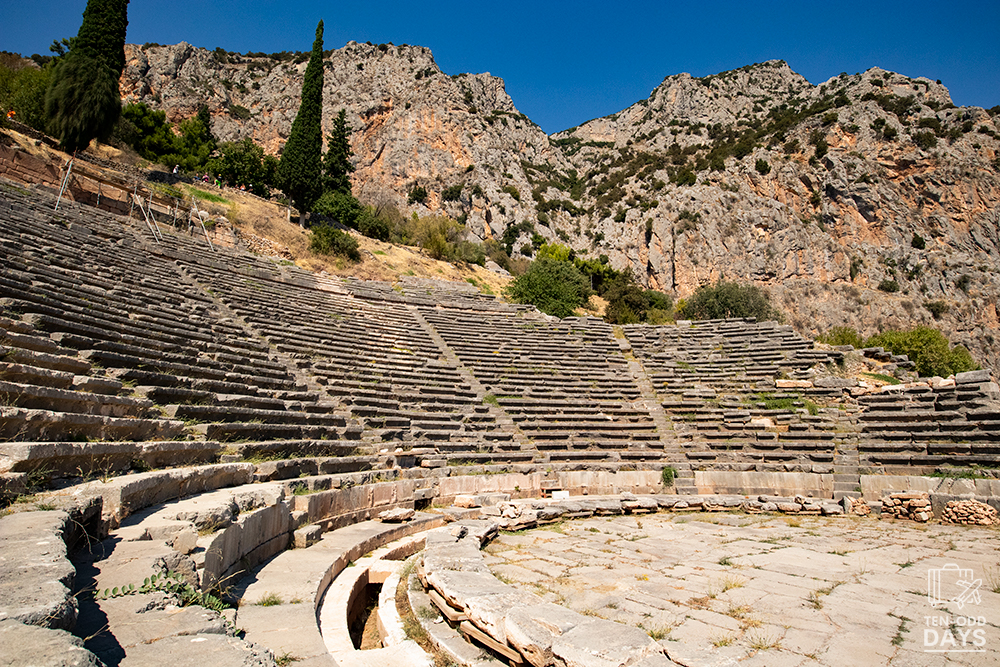
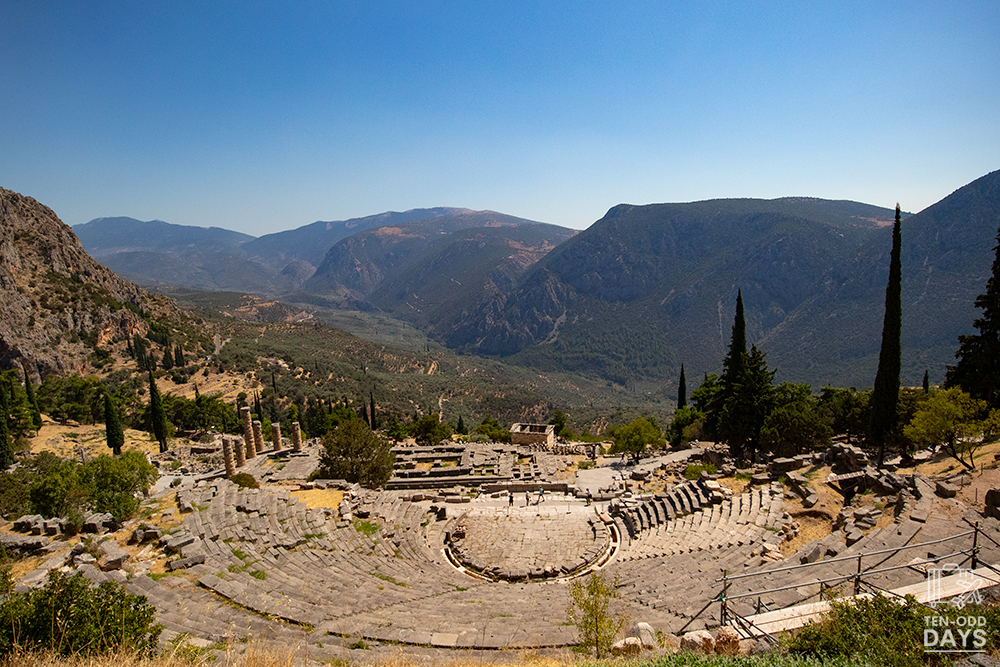
Further upslope the ancient theatre constructed in 4th century B.C. came into sight. Just imagine what a spectacular sight greeted the audience as they sat on the stands and watched plays, poetry readings and music performances, with the entire sanctuary and valley as backdrop. In its entirety of 35 rows (27 rows in the lowers zone, 8 rows in the upper zone), the theatre could sit close to 5,000 spectators.
We continued climbing to the top of the hill to see the Stadium of Delphi. The crowd of visitors had thinned out visibly by then, with many choosing to retrace their steps down the hill instead of continuing on.
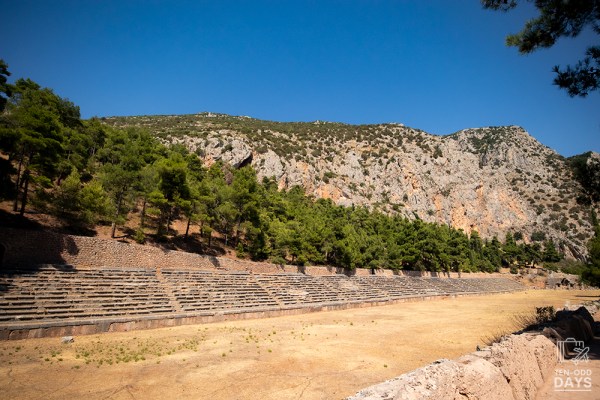
Occupying the highest spot of the archaeological site, the stadium was famous for its chariot races and could sit close to 6,500 spectators during the Pythian Games, held in honour of Apollo. The Pythian Games, at its height, was ranked second in importance, placed only behind the Olympic Games. The games were held once every four years, 2 years after the Olympic Games and included various athletic and artistic competitions. Both male and female competitors were allowed to compete in both types of events.
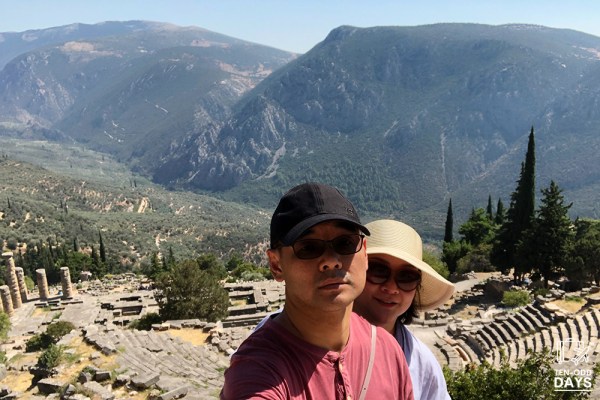
It was way past noon as we made our way down the archaeological site. We were surprised that most of the crowd had left in their tour buses, possibly for lunch. We welcomed the opportunity to take more wefies without photobombers. 😛
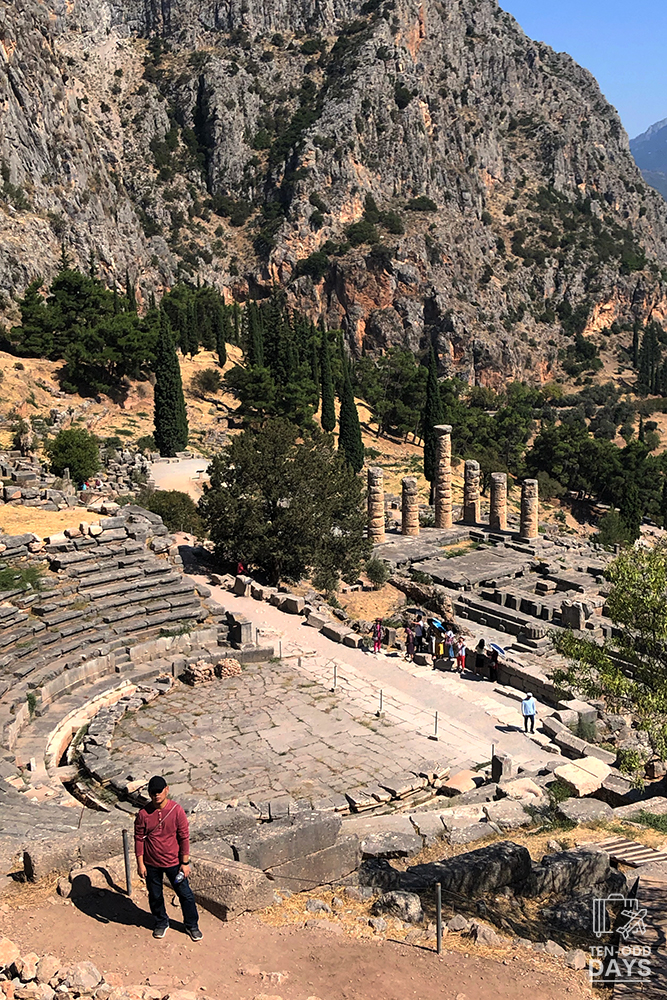
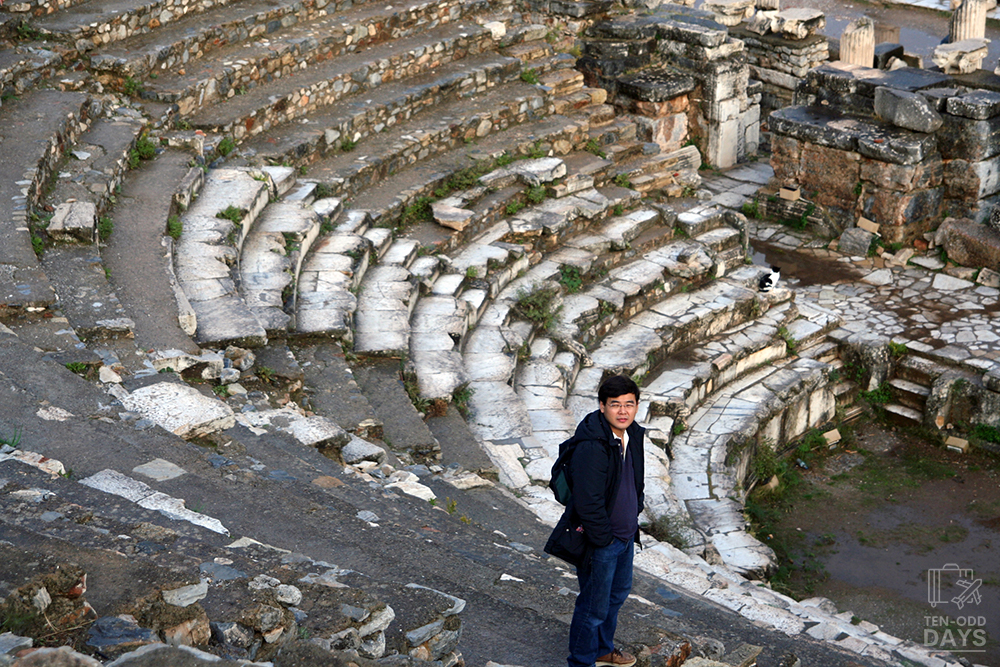
A lot has changed in terms of how we preserve archaeological monuments and sites over the years. Back in 2007 when the mister and I visited Ephesus in Turkey, visitors to the archaeological site were allowed to trample all over the site, including steps at the ancient theatre. Fast forward to 2109 when we were at Delphi: there were barricades all over, preventing anyone from entering the ancient theatre.
It’s a good change. However it also begs the question: were visitors not taking enough care with the trampling on ancient sites that necessitated the move?
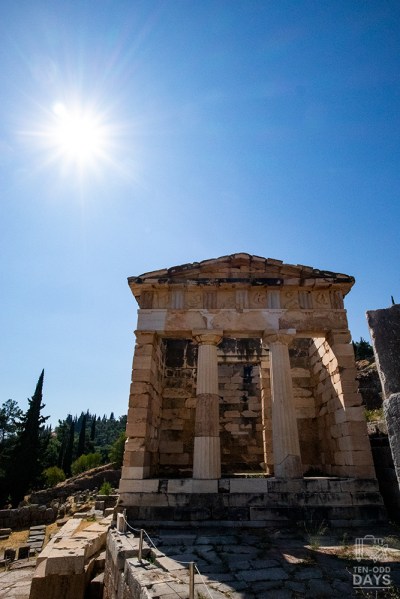
Archaeological sites hold a certain fascination for many, myself included. Without notes and guides, many of these stones and broken remnants mean nothing to us laymen. I have great respect for everyone involved in archaeological work; it’s hard work and mostly thankless. Yet their work are so important in revealing the history and past activity of humankind, how we lived, how we thought and how we died.
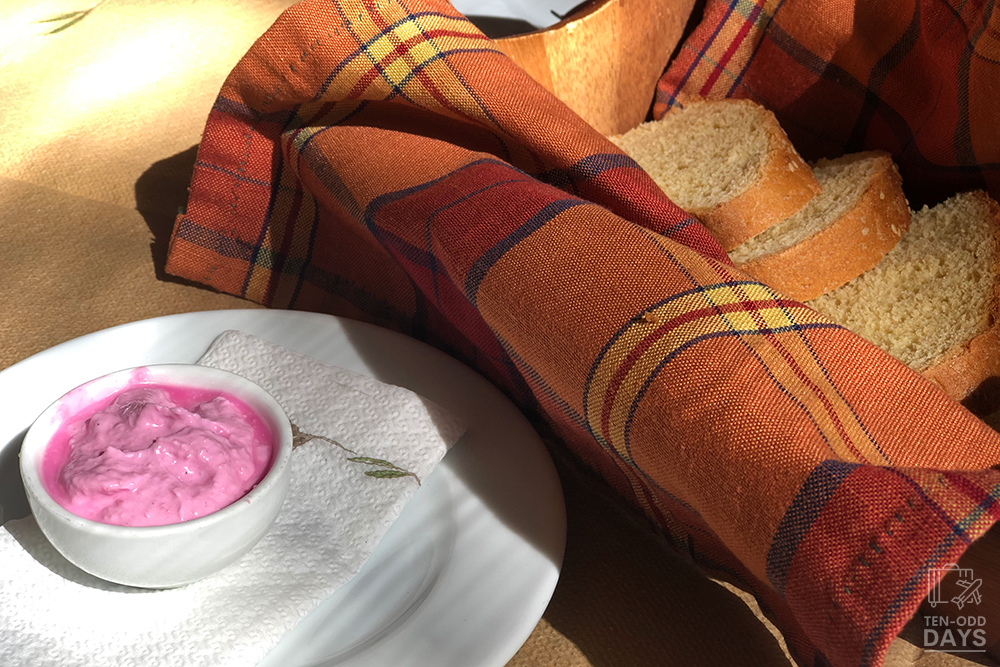
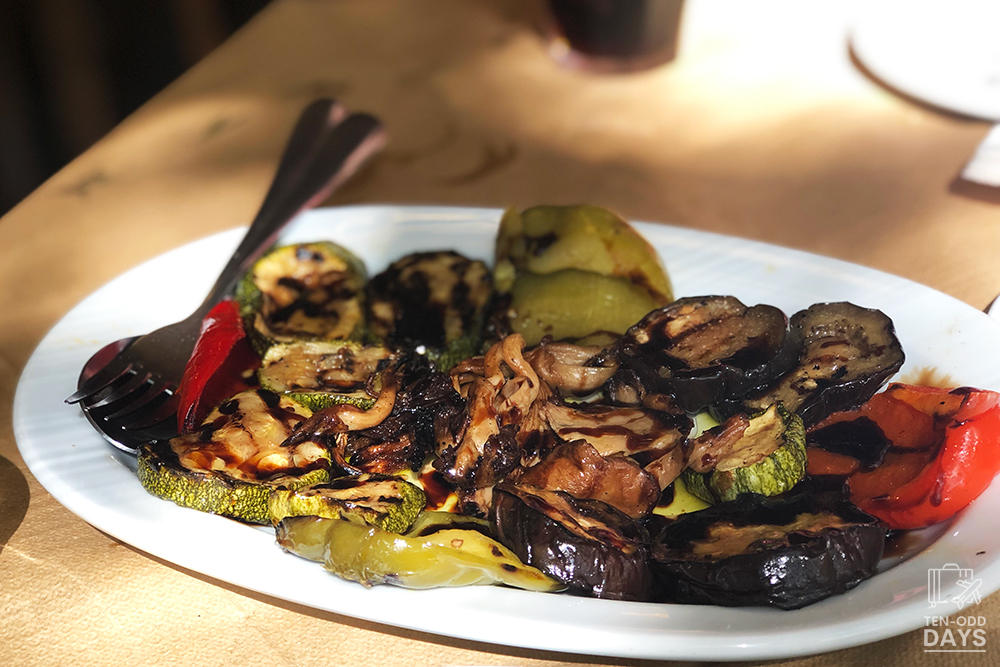
After close to four hours at Delphi, it was time for us to proceed to our next destination, which was a rather long drive away. Way past our lunch hour, but we didn’t have appetite for food even after quite a bit of walking. I blamed it on the weather; at the point I only really wanted iced, cold coke to quench the insatiable thirst. Nevertheless, on our walk back to retrieve the car, we stopped by a restaurant to fuel up with some Mediterranean food.
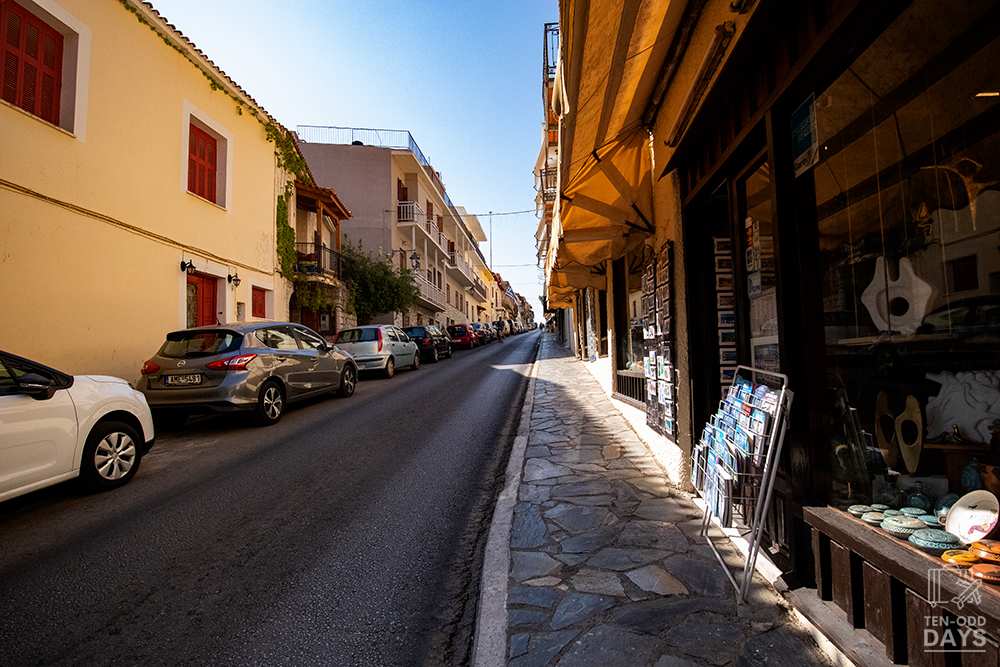
And then it was back to the car for our onward drive to Meteora!

One half of Ten-odd Days - the planning, writing and photo-taking half.
 Ten-odd Days