Ten-odd Days
traipsing to see the world, our way
The Ancient City of Ephesus

Ephesus (near Selçuk in modern day Turkey) was an important ancient landmark. Especially with respect to Christianity, since it was mentioned several times in the Bible. Even the tenth book of the New Testament was a letter from Paul dedicated to Ephesian Christians.
Given its significance, it was fortuitous then, that after traversing from the Istanbul Airport to the western coast of Turkey adjacent to the Aegean Sea, our first stop was to the House of the Virgin Mary. It was said that Mother Mary travelled to Ephesus together with St. John the Evangelist, whom Jesus Christ entrusted his mother to as his newly adoptive mother during his crucifixion, and it was here that they lived.
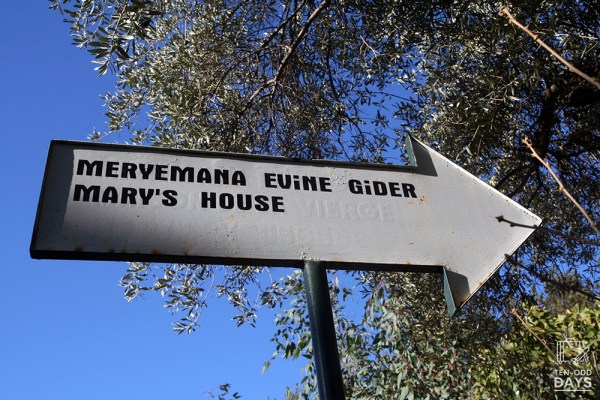

While the Catholic Church neither confirmed nor denied the authenticity of this house in which Mother Mary has lived and died, three Popes have visited this site namely: Pope VI, Pope John Paul II and Pope Benedict XVI. I would think the gesture alone speaks volume, to say the least, nevermind the official stance.
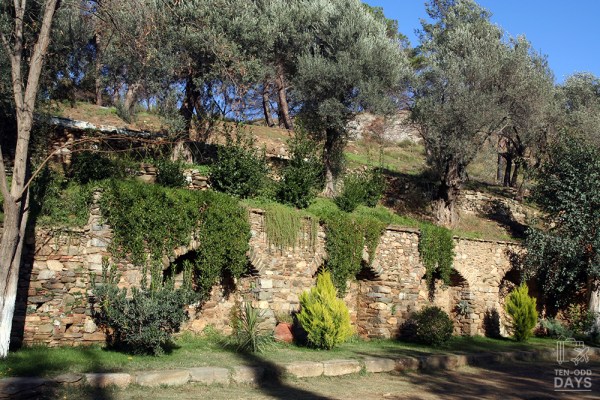
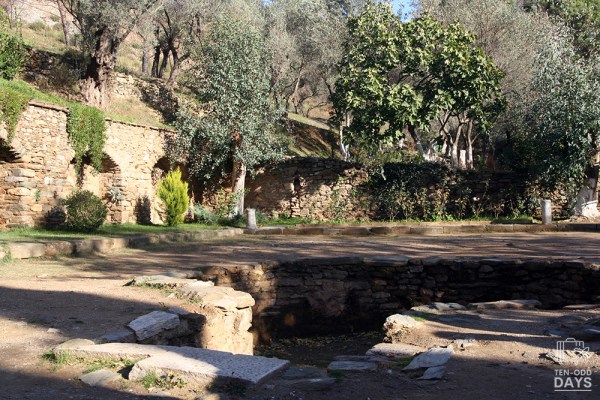
The House of the Virgin Mary was located a mere 9km away from the ancient site of Ephesus, and what greeted us in the early afternoon when we visited was a picture of serenity. Greenery surrounded the site, and we were rather surprised to find ourselves the only visitors to this rather significant religious site. And as with most ancient Christian shrines, the dried up baptismal font was located near the entrance and was the first sombre reminder that we have entered a religious site.
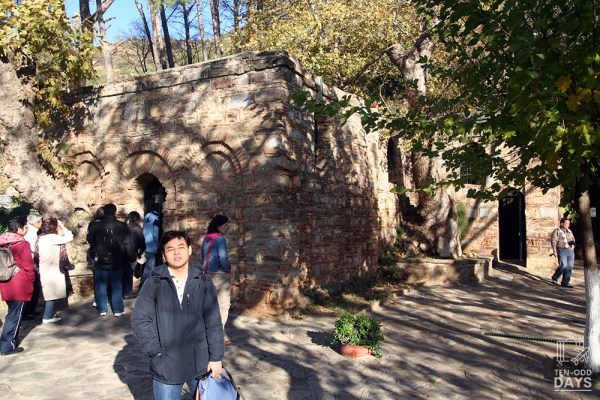
We walked a little way ahead to catch up with the group (we dawdled and lagged behind while taking pictures) and came to a halt as we patiently waited for our tour group mates to make their way into the nondescript stone house via a tiny doorway. It gave me a great opportunity to stray away from the group once again, to the chagrin of the mister.
None of the original furniture remained in the house, if my memory serves me well. The interior has been converted into a chapel, wherein by the time we entered, was almost void of visitors. I lit a candle, said a little prayer, and we made our way out.
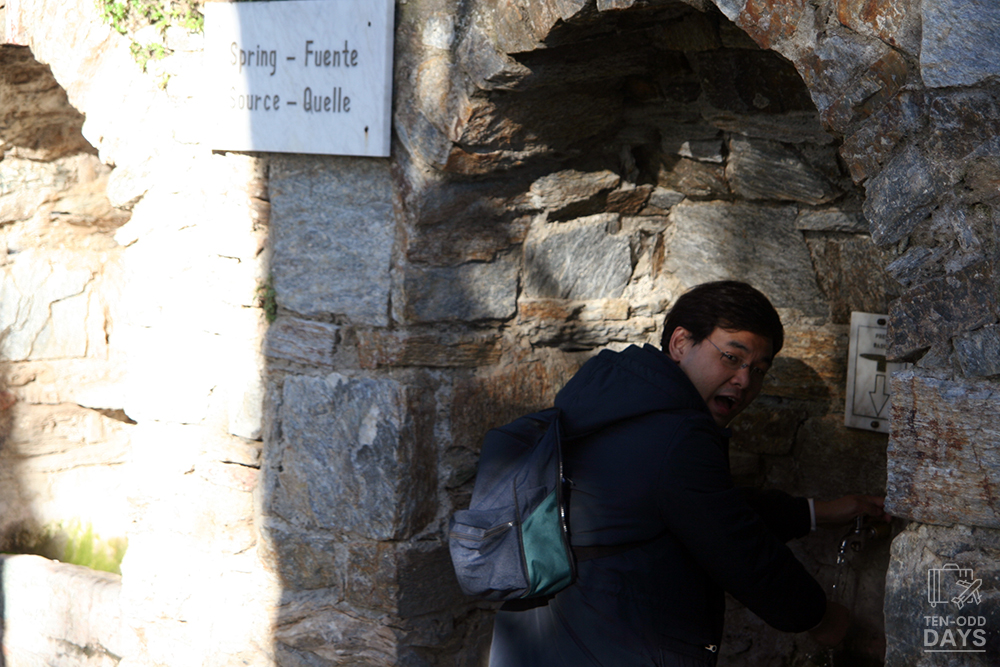

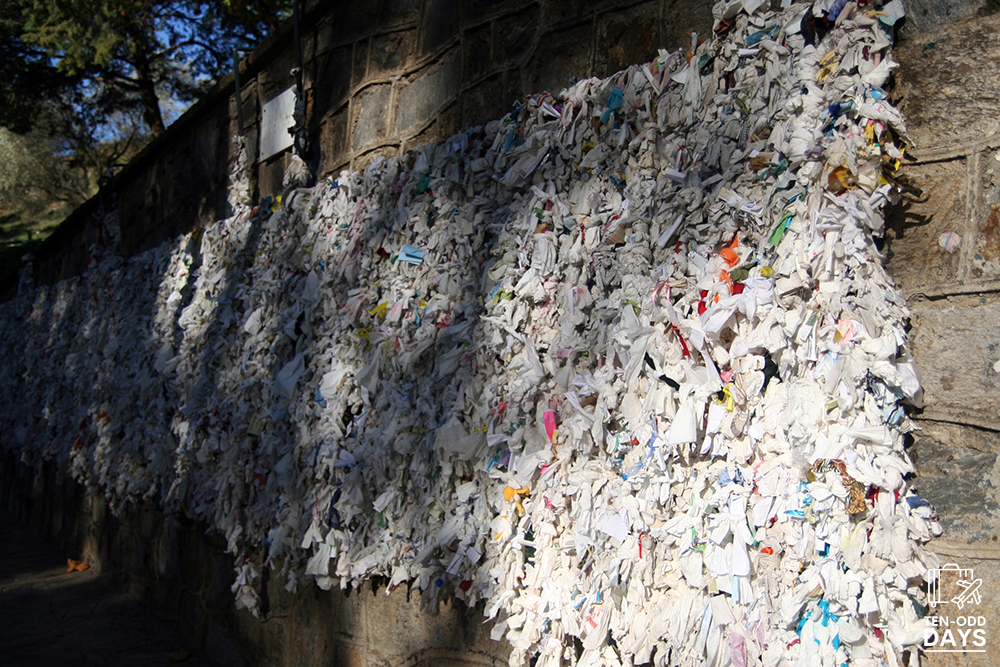
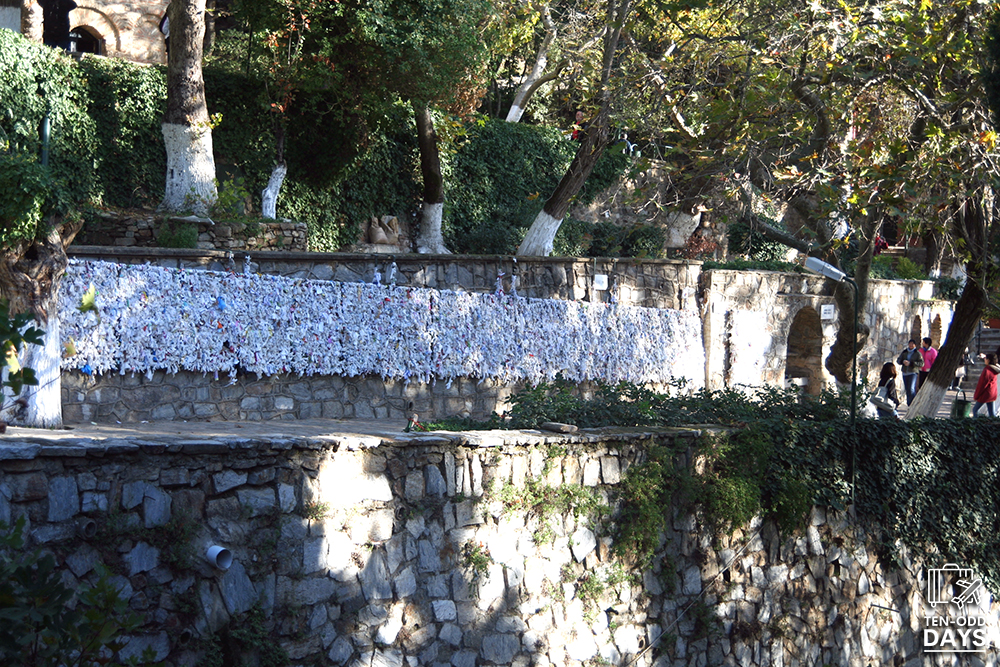
We explored the rest of the site, and came by the holy water taps and a wishing wall! There were three taps in total that released holy water. We didn’t know the difference between the three taps and randomly chose one like everyone else did. Water was cool and provided some respite from the afternoon sun, although in general the whole site was shady from the carefully pruned greenery that surrounded us.
The wishing wall though, was impressive and a rather curious sight to us! We’d come across bridges and walls filled with love locks, or in Japan, Shinto shrines with trees tied with paper ‘bad fortune lots’. But this, a wall filled with personal possessions of wishes, was a first.
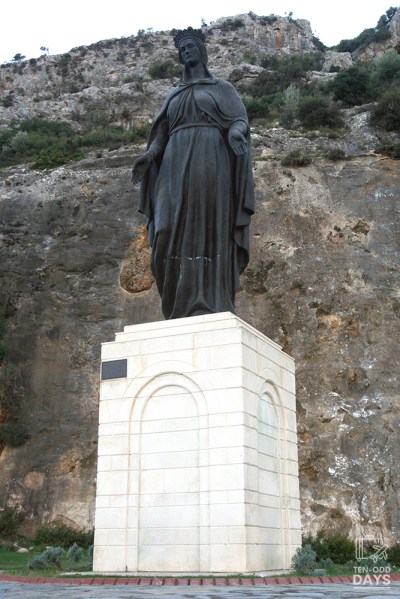
On our way back to our accommodation, we passed by this bronze statue of Mother Mary. To us, it really seemed like it was erected by the roadside, in the middle of nowhere. Yet I believe its location was not a coincidence, given its proximity to the House. We alighted from our coach, crossed the road to take some pictures of the statue of Madonna and Ephesus in the distance before embarking again, calling it a day.
In comparison to the tranquility we experienced at the House of the Virgin Mary, Ephesus was bustling with activity when we visited the following morning, despite the drizzle. It came across as rather strange that the former was skipped despite its proximity to Ephesus. We were glad we took up an organised tour that didn’t opt to skip it.
Ephesus was an ancient port city, and at a time, was populated with close to a quarter million of people, coming in a close second to most populous Rome. Excavations revealed that there was already an ancient human settlement in the area since the Neolithic Age. It went through numerous changes over the centuries that reflected a long human history and cultural traditions, from Hellenistic to Roman Imperial and early Christian periods.

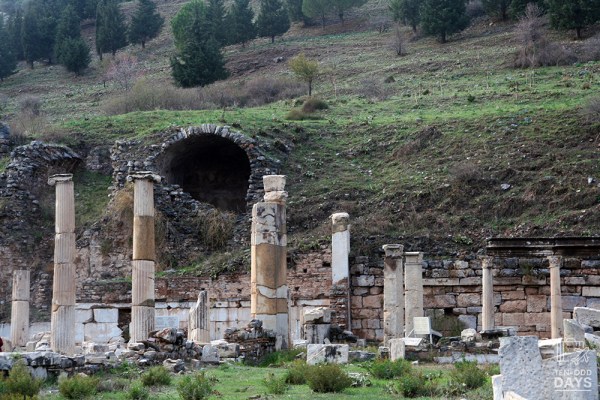
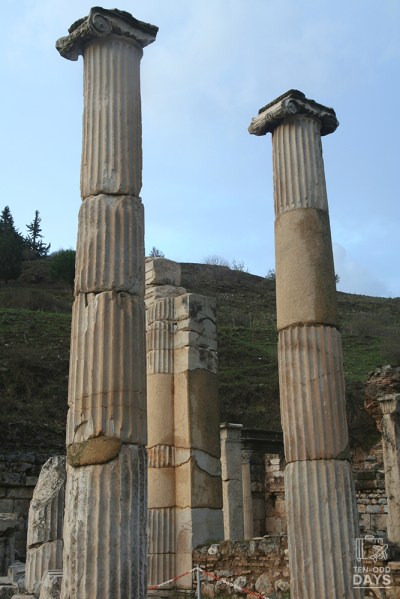
Piles and piles of rocks greeted us as we walked through the ancient archaeological site, and they would have been totally unintelligible to us if not for our local guide. To be honest, even with his explanation, we couldn’t quite visualise the past grandeur of this ancient site that was once deemed to be the most important Greek city.
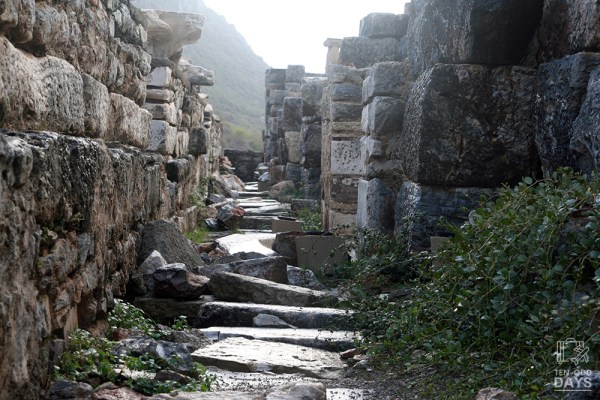
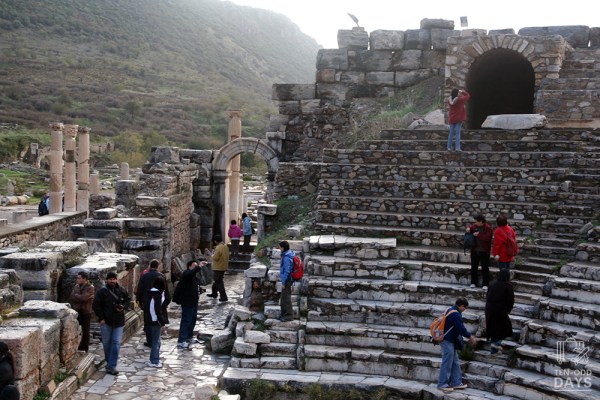

Incidentally this picture turned out to be one of the most iconic pictures I’ve taken on this trip.
It was drizzling and we had to tread slowly over the slippery rocks, careful not to slip and fall. And finally, we came to a site that didn’t require too much of our imagination. All of us could tell that it was an amphitheatre of sorts, and true enough, that was the Odeon, a small theatre with a capacity of 1,500 spectators.
Back in 2007 when we visited (I’m really only writing this post in 2021, 14 years later), we were stepping all over the ancient theatre. It wasn’t disallowed. I wonder if things have changed now, in order to preserve the site. Degradation of archaeological sites due to natural causes through the course of time is a harsh reality all archaeologists fear and deal with on a daily basis. They really don’t need further destruction due to human negligence.

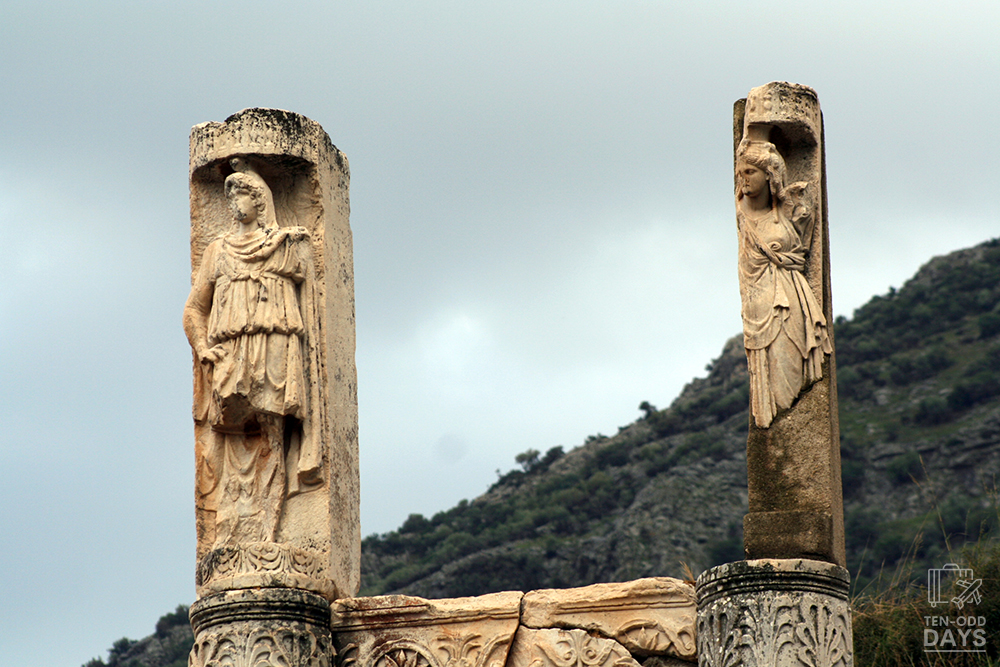
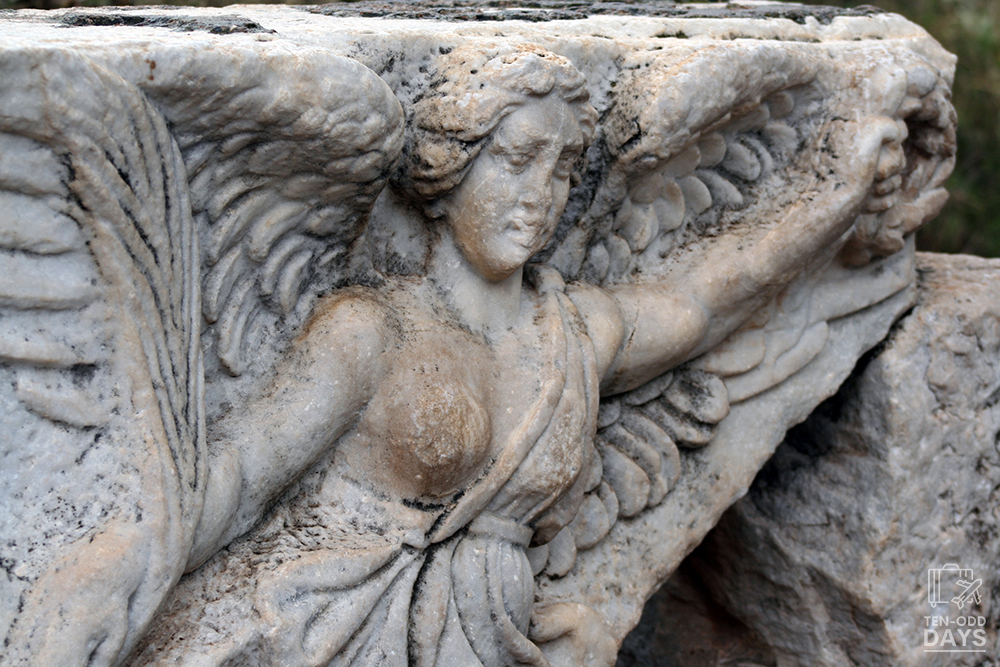
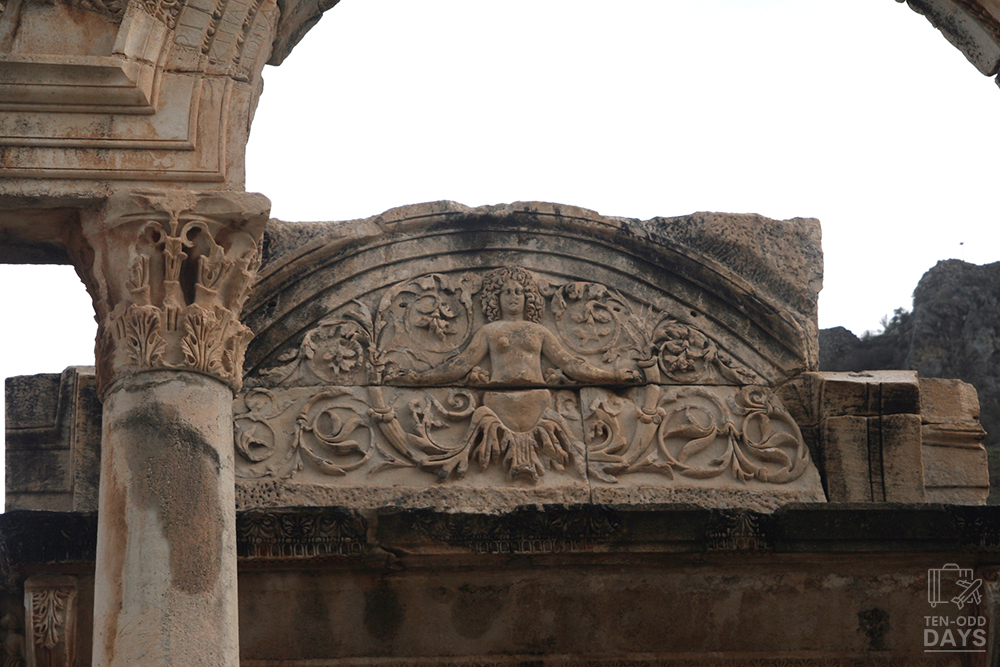
More ruins along the way as we meandered through the site. This round, more carvings and ornamental stones than random stones stacked on top of each other. In fact the white stone carving is one of the Greek goddess Nike who personified victory. Call me ignorant – I didn’t know there was a Greek goddess named Nike! 😮
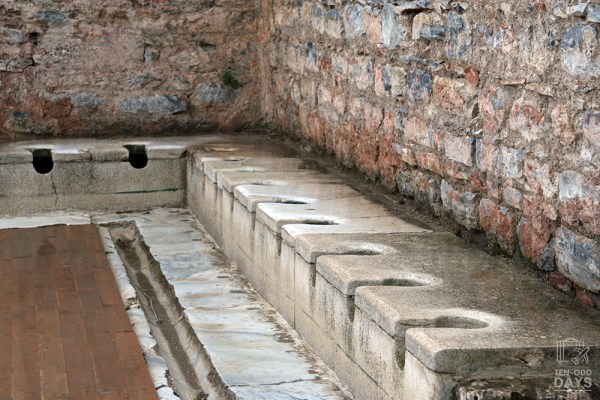
And if you think you know what this is, you are probably right. It was the public latrine and everyone recognised it at first glance. 😆 We discussed at length on whether we would use it. To be honest, I’m really not so sure… given a choice, I would rather go home.
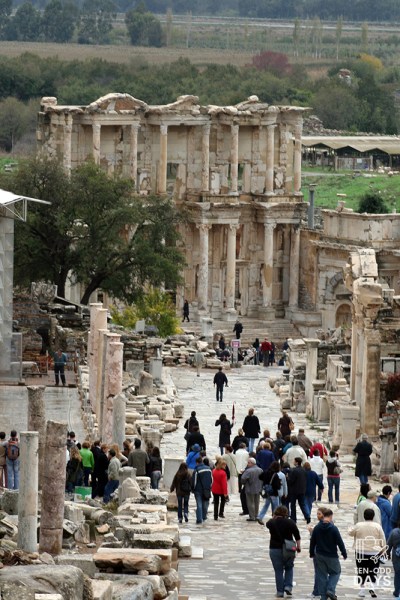
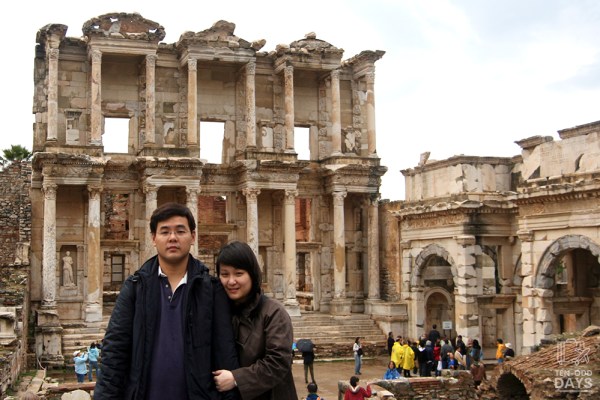
And at long last, we arrived at the Library of Celsus. This library was built at the behest of Gaius Julius Aquila, a consul in imperial Rome, in honour of his father. At its height, the library was believed to have contained a repository of as many as 12,000 scrolls and was said to be the third largest library in the Roman empire, behind Alexandria and Pergamum.


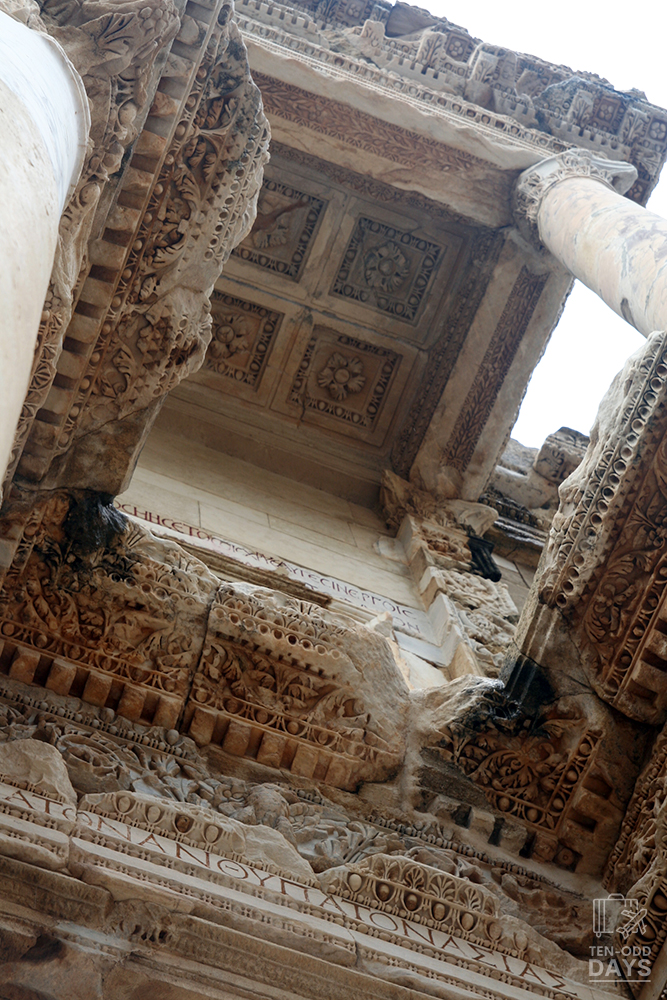
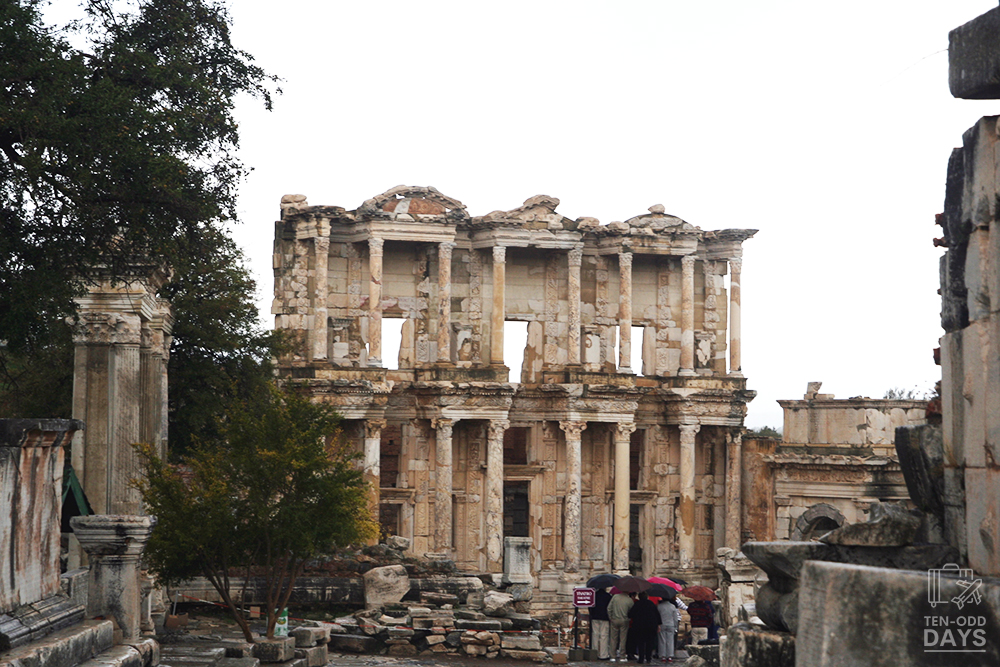
A fire or earthquake was believed to have destroyed the interior of the library and its contents in the 3rd century. The facade withstood the destruction, only to be destroyed during an earthquake a few centuries later. It laid in ruins quietly over the centuries until 1970 when a team led by a German archaeologist commenced a reconstruction campaign. Between 1970 and 1978, the facade of the ancient library was carefully reconstructed either from the pieces found at site or copies made from some pieces that were already acquired by museums. It was by and large a vastly successful reconstruction project, if you ask a layman like me.
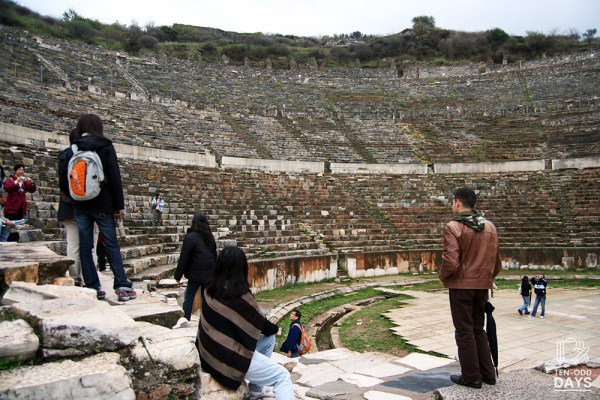
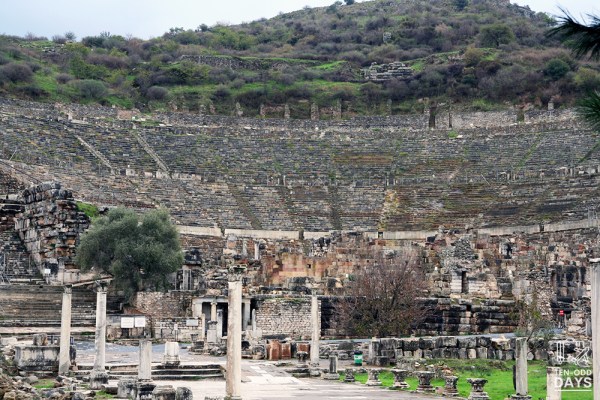
And the last monument we arrived at before leaving the archaeological site was the well-preserved Grand Theatre of Ephesus, first constructed during the Hellenistic period and later, to be modified several times during Roman times. When it was fully functional, this theatre could hold up to some 24,000 seated spectators. With the Grand Theatre as our end point, we had some time to explore the area. By then, crowd at the archaeological site had visibly thinned. We were quite possibly the last group of people to clear the site for the day.
Leaving you with a picture of how impressive the Grand Theatre looked from afar as we departed.

One half of Ten-odd Days - the planning, writing and photo-taking half.
 Ten-odd Days