Ten-odd Days
traipsing to see the world, our way
Spain’s 3rd Largest City, Valencia


We bade farewell to Barcelona early in the day and boarded the coach that was to be our main mode of transport for the whole duration of the trip. And since our group size wasn’t very large, everyone had ample space to take two seats each. Very helpful for stretching out when needed since we were spending a lot of time on the roads tracing the lower coast of Spain.
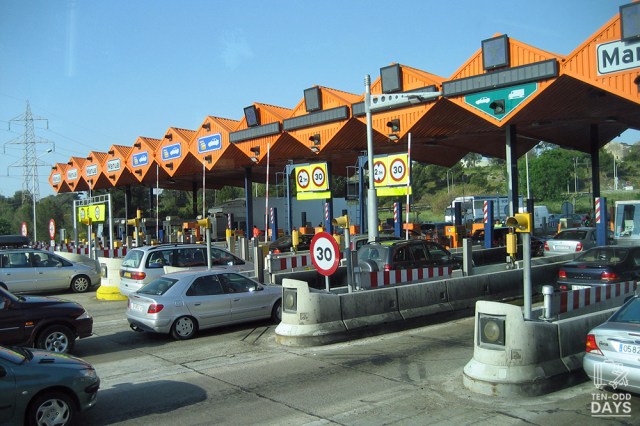
After a pit stop to relieve our bladders, we headed for Peníscola, an ancient fortified seaport that is now part of the Valencian Community. Often called ‘Gibraltar of Valencia’, it is located along the Mediterranean Coast and a very popular tourist destination. If Peníscola sounds familiar to you as it did to me, it is likely because you’ve heard of the annual comedy film festival that the town hosts. Either that, or you might have mixed it up with yet another place with beautiful beaches – Pensacola in Florida, United States of America. I know this because well… I did. 😆
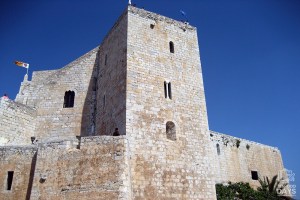
The old town of Peníscola comprises a confusing maze of narrow winding cobbled stone streets with the castle located at the highest point of the town, at 64 square metres above mean sea level. It was built by the Knights of the Templar in the late 13th century, and since then it had undergone several minor alterations.
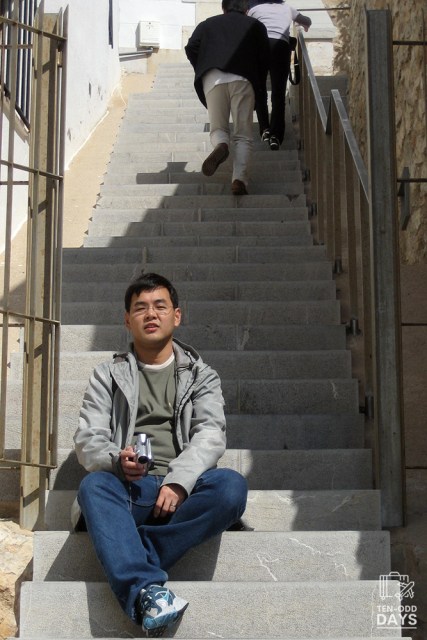


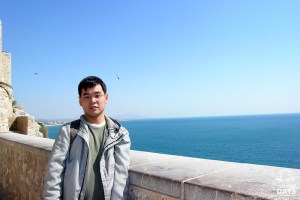
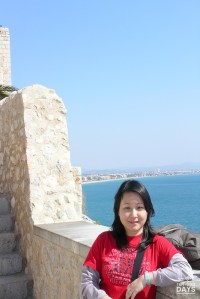
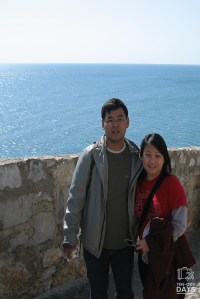
It was a gorgeous, beautiful day with cloudless blue skies as we came into close contact with the Mediterranean Sea and finally understood its enigmatic draw. Long romaticised as the destination for lovers, the many islands and coastal cities with dramatic coastlines surrounding the Mediterranean Sea are often overrun by tourists during the popular summer months. It really doesn’t help that many of these coastal cities and bigger islands are also ports of call for cruise ships (I’ll admit I am not a fan of cruise ships – they destroy the environment at least three times more severely than aircraft). In this respect, we have chosen well, to visit Peníscola during the shoulder month of April. I felt immense relief at not having to jostle with crowds of cruise ship tourists while we explored the walled fortress.
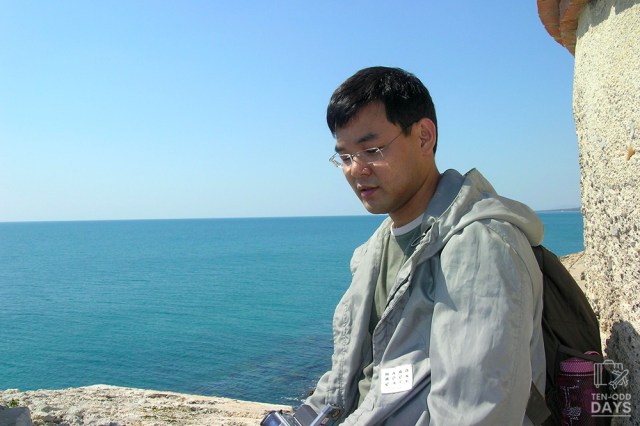
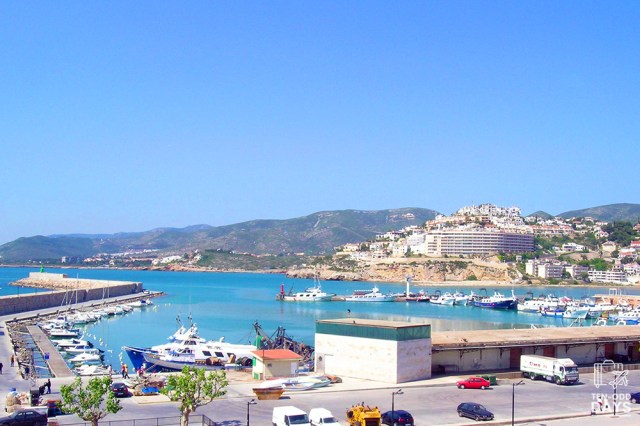
The Mediterranean Sea is indeed blue in colour. Its lacking in certain nutrients promoting growth of sea algae resulted in the signature blue and clear waters. The lack of sea algae meant that the water remains close to pure water, hence reflecting the true colour of the sky. That doesn’t really explain all of the factors why seas and oceans appear blue, but for the most part, this does explain why the Mediterranean Sea appears bluer than the rest of them.
Sadly, it won’t stay this way for long given the pollution from increased sea activity supporting tourism. Sustainable tourism is a term coined only in recent years, but one that resonates with me as we travel more widely over the years. It’s a huge topic to cover on its own so for now, I shall just leave it here as food for thought.
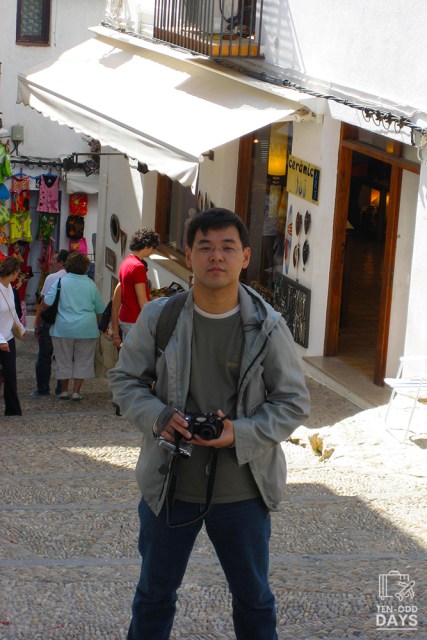
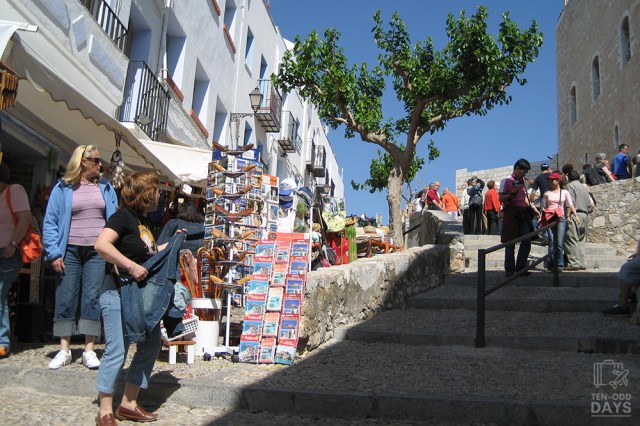
The castle is now a popular tourist attraction and the beaches and surrounding area a popular family holiday resort. The surrounding shops, I have to say, are mostly tourist traps selling run-of-the-mill souvenirs. This is unfortunately the way it has become for most, if not all popular tourist spots. Nevertheless, that did not take away the charm of the ancient town one bit. And I’m all for it if these retail activities help support the livelihood of the locals.
Around noon when the sun was getting a little too hot for comfort, we returned to our coach to seek refuge and headed for Valencia, the third largest city of Spain after Madrid and Barcelona.
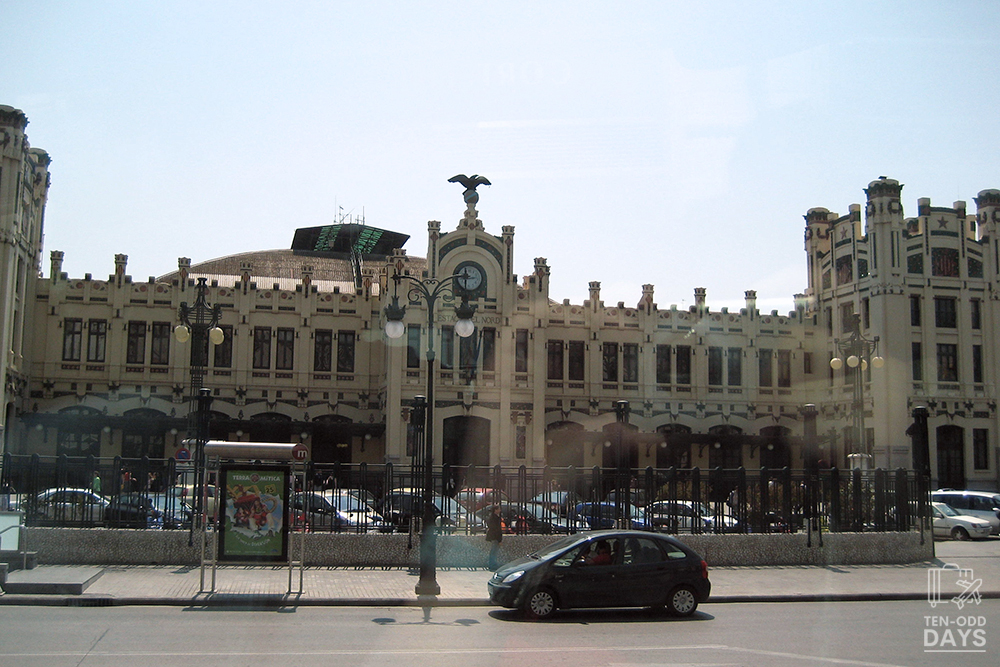

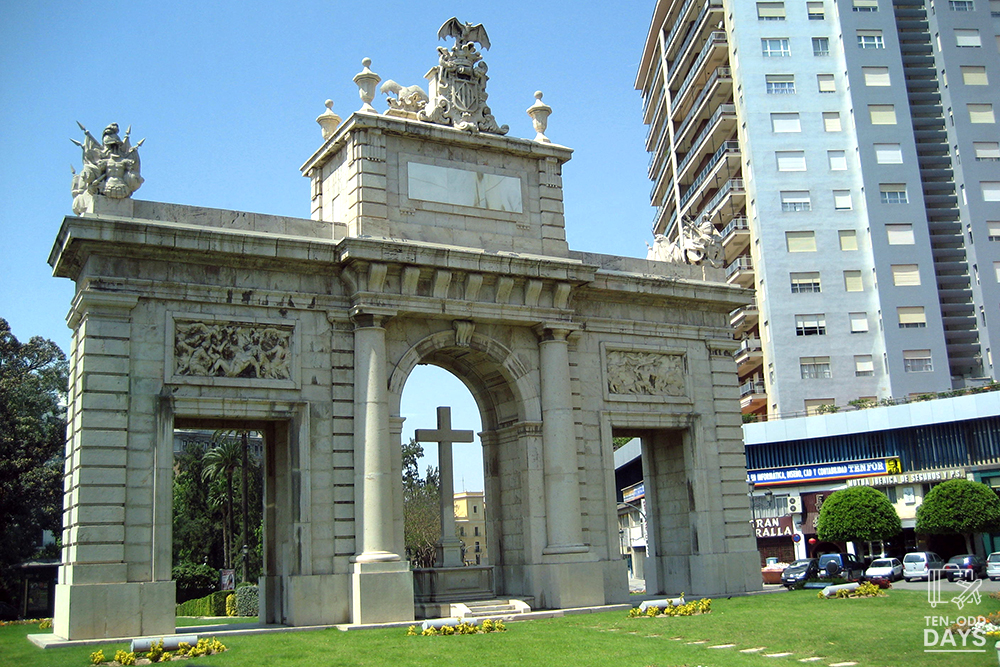
And one of the first things we did was to sight-see Valencia while in the coach. I was thoroughly impressed with the various architecture found all around the city, especially in the centre where Romanesque architecture dominated. We were driven across town to make a stop at the world famous City of Arts and Sciences.
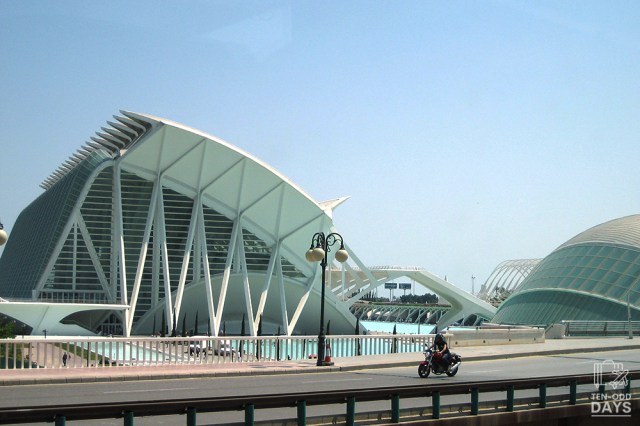
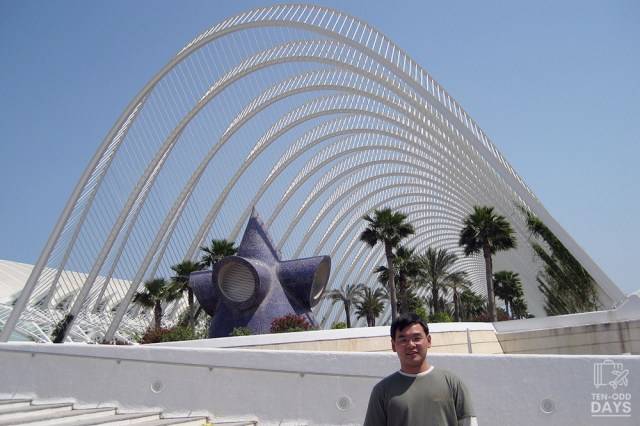
Being the most important modern tourist attraction of Valencia, the cultural and architectural jewel that is City of Arts and Sciences feature several futuristic-looking structures including one that resembles the skeleton of a whale and an open-air structure made of numerous arches encompassing plant species indigenous to the region serving as the entrance to the ‘city’. In the ‘city’ there are several museums and other interesting spaces which we unfortunately did not have enough time to explore in further detail..

Valencia Cathedral, also known as Saint Mary’s Cathedral, was our next destination. As with most European cities, this church sits in the heart of the old town. It was consecrated in the 13th century as a Catholic Church that was built over the site of a Visigothic church, which was turned into a mosque when the Moors occupied Valencia. This church has a vastly interesting history this way, but hardly unique since we later learnt that the church in Córdoba has a similar history.

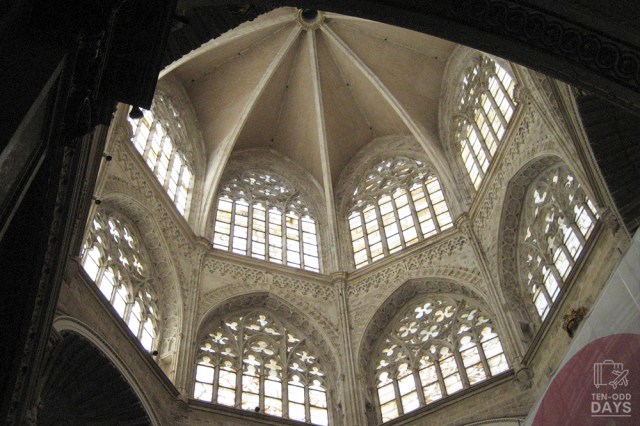
Because the construction of the church was built over two centuries from the 13th to the 15th century, the structure consisted of several different artistic styles, but predominantly Gothic. While the interior does look a little like a mishmash of several architectural styles, the vast majority of visitors to the church miss this as they pay the most attention to the chapel located at the back of the church, for a very important artefact housed within.
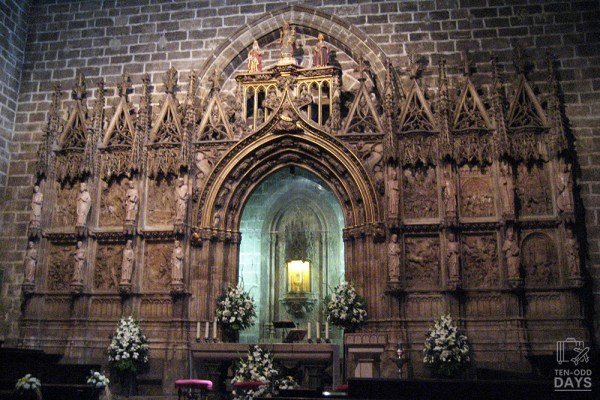
From the standpoint of Roman Catholicism, the Valencia Cathedral is exceptionally important because of the rather nondescript Chapel of the Holy Chalice within the church. Or rather, what the chapel keeps behind the protective glass – the Holy Chalice, also known as the Holy Grail, believed to the cup that Jesus drank from at the Last Supper with his apostles. Religious historians cannot agree on how it travelled all the way to Valencia, and while no one can really prove that this is the authentic Holy Grail, it is probably the most famous of the several Holy Grails there are.
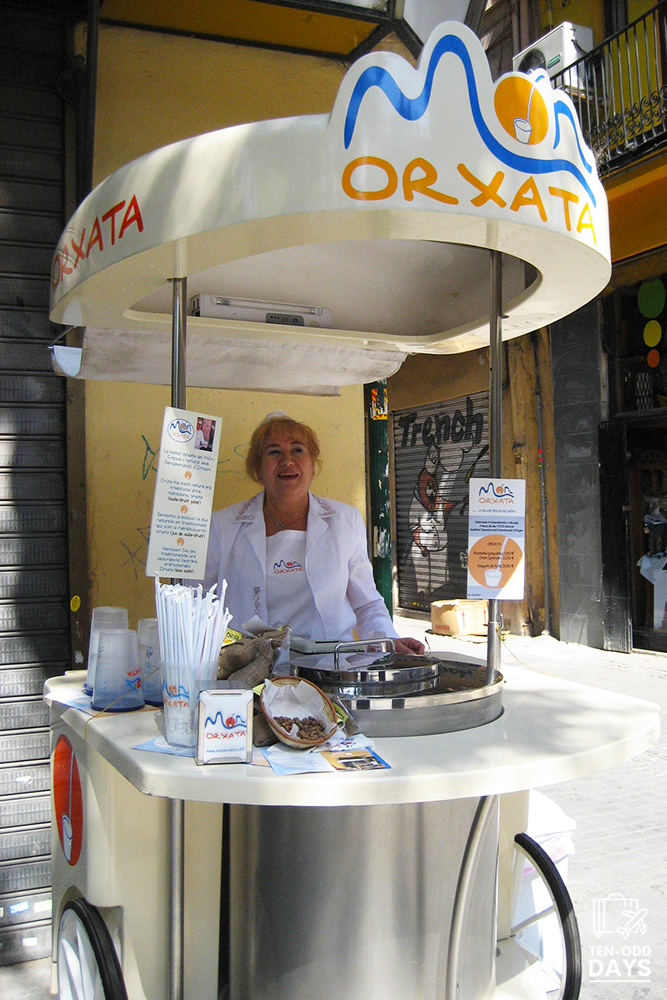
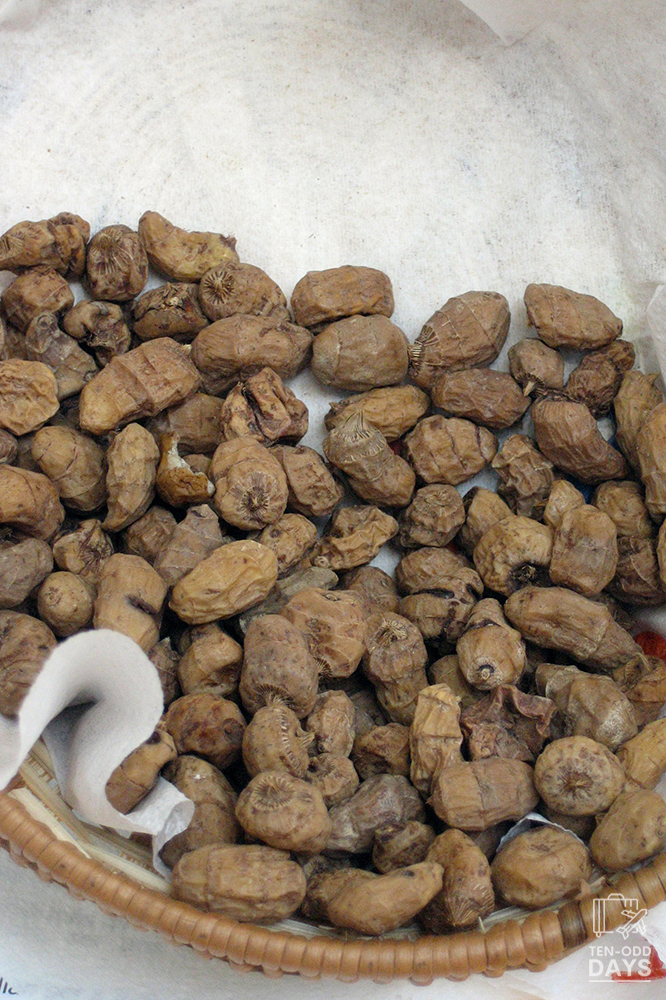
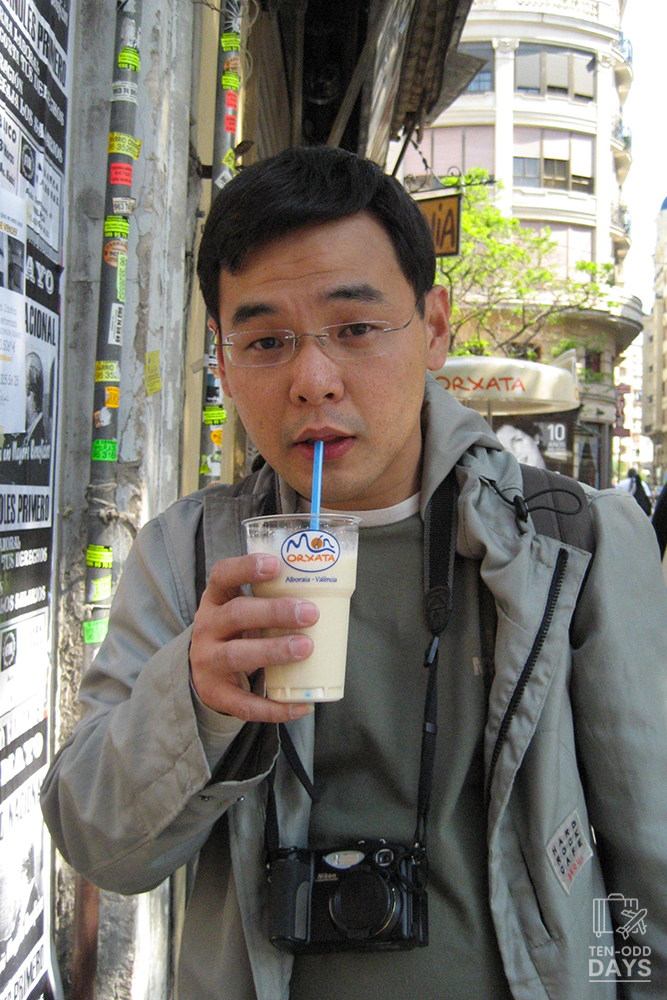
After the immensely interesting guided tour of the Valencia Cathedral, we explored the streets of the city and came across a mobile kiosk selling Orxata. Orxata, a drink made from nuts and apparently unique only to Valencia, originating as far back at the 13th century. Our group crowded around the mobile kiosk and inundated the poor Spanish lady with our orders, curious about the taste. The drink was very refreshing and to be honest, tasted just a tad like the soybean milk that I liked. A welcomed beverage given how scorching hot it was getting.
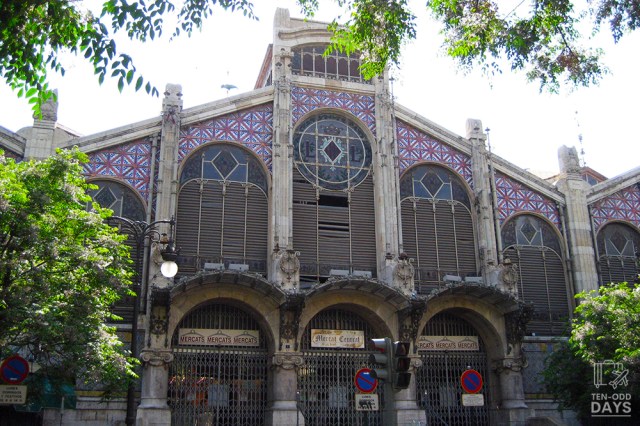
As we continued with our walking tour, we came by an impressive large building that was closed. We were told that this was the market. The Mercat Central of Valencia (Spanish: Mercat Central de València) is claimed to be one of the biggest and oldest markets in Europe. It started out as an open-air marketplace in the 19th century and did not have a roof until 1928 when construction was completed.


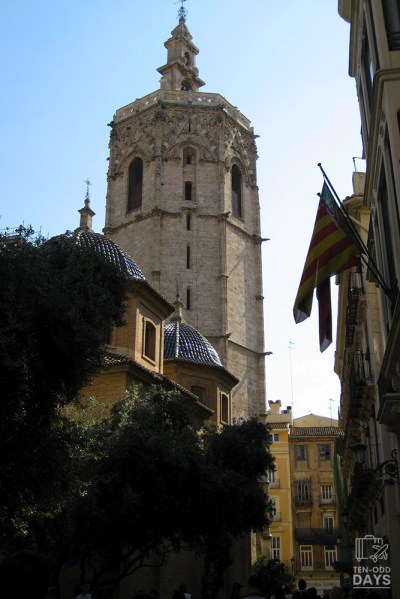
We finally rounded up our walking tour with a view of El Miguelete Bell tower attached to the Valencia Cathedral. Like the church itself, the bell tower looked like it was designed by an architect who couldn’t decide on the style he wanted the tower to be built in. This functioning bell tower is a curious sight, for it seems to be incomplete, exposing the large bells. Indeed, the bell tower never finished construction after it was halted for some reason in the 18th century. The final phase of construction never resumed since the locals decided that they liked how the bell tower looked. And this is how this unique-looking tower comes to existence.
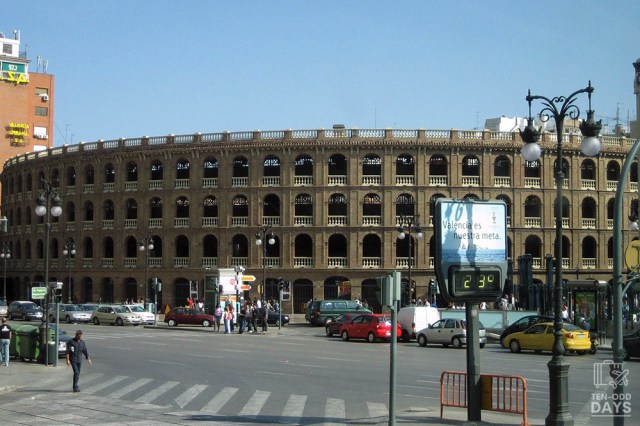
If Plaza de Toros de Valencia (officially Plaça de bous de València) somewhat reminds you of the Colosseum in Rome, that’s because this bullring arena built in neoclassical style in the 1850’s did take inspiration from Rome architecture including the Colosseum and the likes. Situated almost right smack in the city centre, this arena sits over 10,000, making it one of the largest arena in Spain, making it really hard to miss.
Anyhow we passed by (several times) but a pity we didn’t get the opportunity to enter for a visit since we were on a tight schedule. In fact, that was the last landmark we saw of Valencia in daylight. We had to travel onwards to our accommodation for the night before travelling some 500km to our next destination – Granada.

One half of Ten-odd Days - the planning, writing and photo-taking half.
 Ten-odd Days